Restaurant Startup Costs | 2026 Data
Opening a restaurant in 2026 costs $175,000 to $500,000 for most independent operators, with a median full-service build landing around $375,000.
Opening a restaurant in 2026 costs $175,000 to $500,000 for most independent operators, with a median full-service build landing around $375,000. A second-generation quick-service space can open for as little as $80,000; a from-scratch fine-dining buildout can pass $1 million. The three costs that move the number most are the buildout, the kitchen equipment, and the first few months of working capital — and almost no owner pays for all three in cash.
Below is the full 2026 breakdown, line by line, plus what we see in real funding requests from restaurant owners.
Total Cost to Open a Restaurant (2026)
| Restaurant type | Typical startup cost |
|---|---|
| Quick-service, second-gen space | $80,000 – $150,000 |
| Fast-casual, new space | $175,000 – $300,000 |
| Full-service, independent | $275,000 – $425,000 |
| Fine dining / from-scratch build | $500,000 – $1,000,000+ |
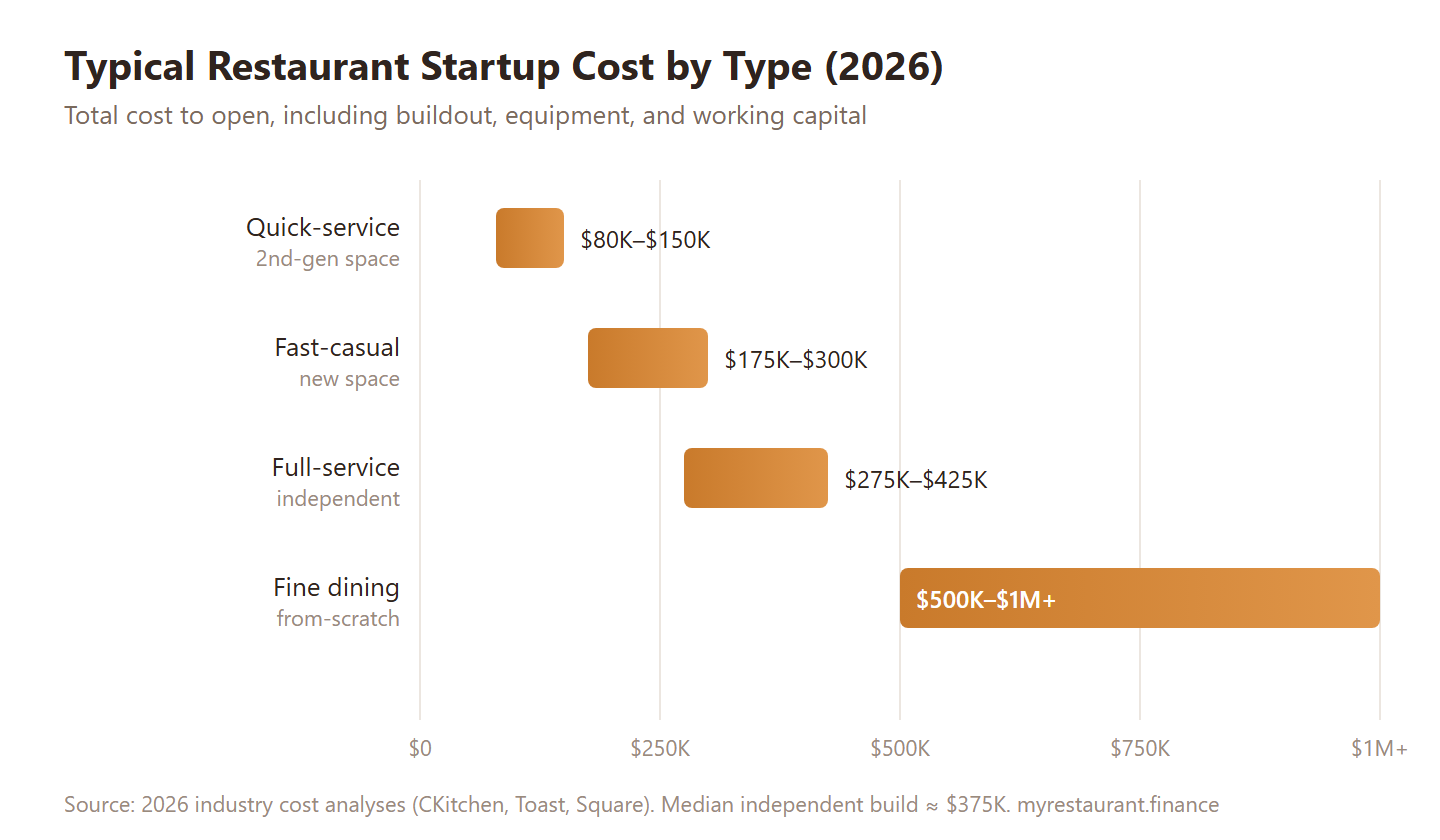
Averaged across independent restaurants, per-square-foot startup cost runs about $113/sq ft, though the buildout portion alone ranges from $100 to $800/sq ft depending on how much work the space needs. A "second-generation" space (a former restaurant with usable infrastructure) is the single biggest lever for coming in cheap.
Where the Money Goes: Cost Breakdown by Category
| Category | Typical cost | Share of budget |
|---|---|---|
| Buildout / leasehold improvements | $75 – $250 / sq ft | ~25–35% |
| Kitchen equipment | $40,000 – $150,000 | ~20–30% |
| Working capital (first 3–6 months) | $50,000 – $150,000 | ~15–25% |
| Rent + security deposit | 2–6 months upfront | ~10% |
| Licenses, permits, insurance | $12,000 – $40,000 | ~5% |
| POS, tech, furniture, signage | $20,000 – $60,000 | ~10% |
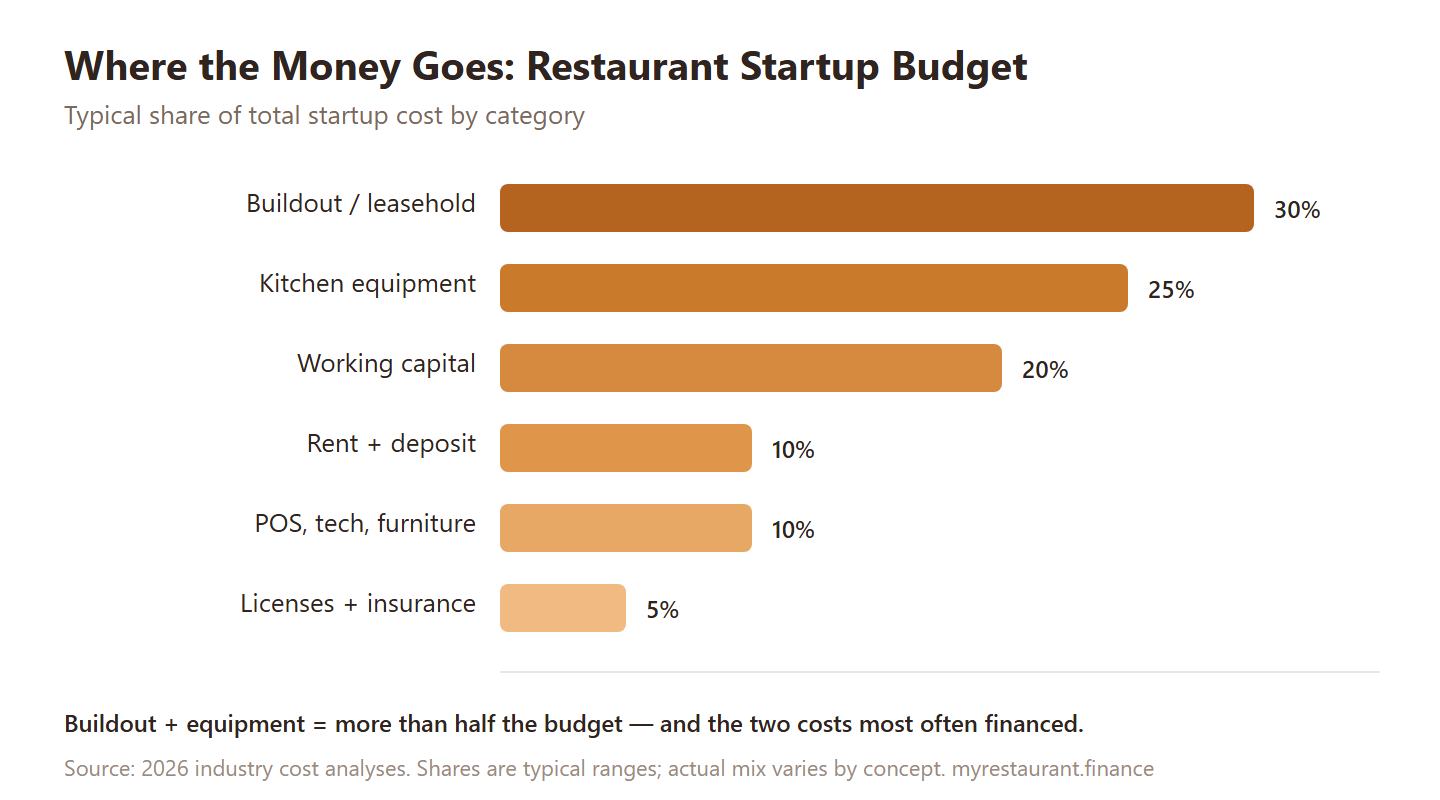
The pattern is consistent across sources: buildout and equipment are almost always the two largest line items, and together they usually eat more than half the budget. That's also why they're the two costs most often financed rather than paid in cash — the buildout through an SBA loan, the equipment through restaurant equipment financing where the equipment itself is the collateral.
What Restaurant Owners Actually Ask to Finance
We run a network of small-business funding sites, so we see what owners come looking for. Across recent funding requests, the single most common purpose is equipment — it's the #1 reason owners across our food-service and small-business sites seek financing, ahead of expansion, working capital, and debt consolidation. On amount, requests cluster in two bands: a large group in the $3,000–$25,000 range (single equipment purchases, working-capital gaps) and a second in the $25,000–$100,000 range (full kitchen packages, buildout contributions).
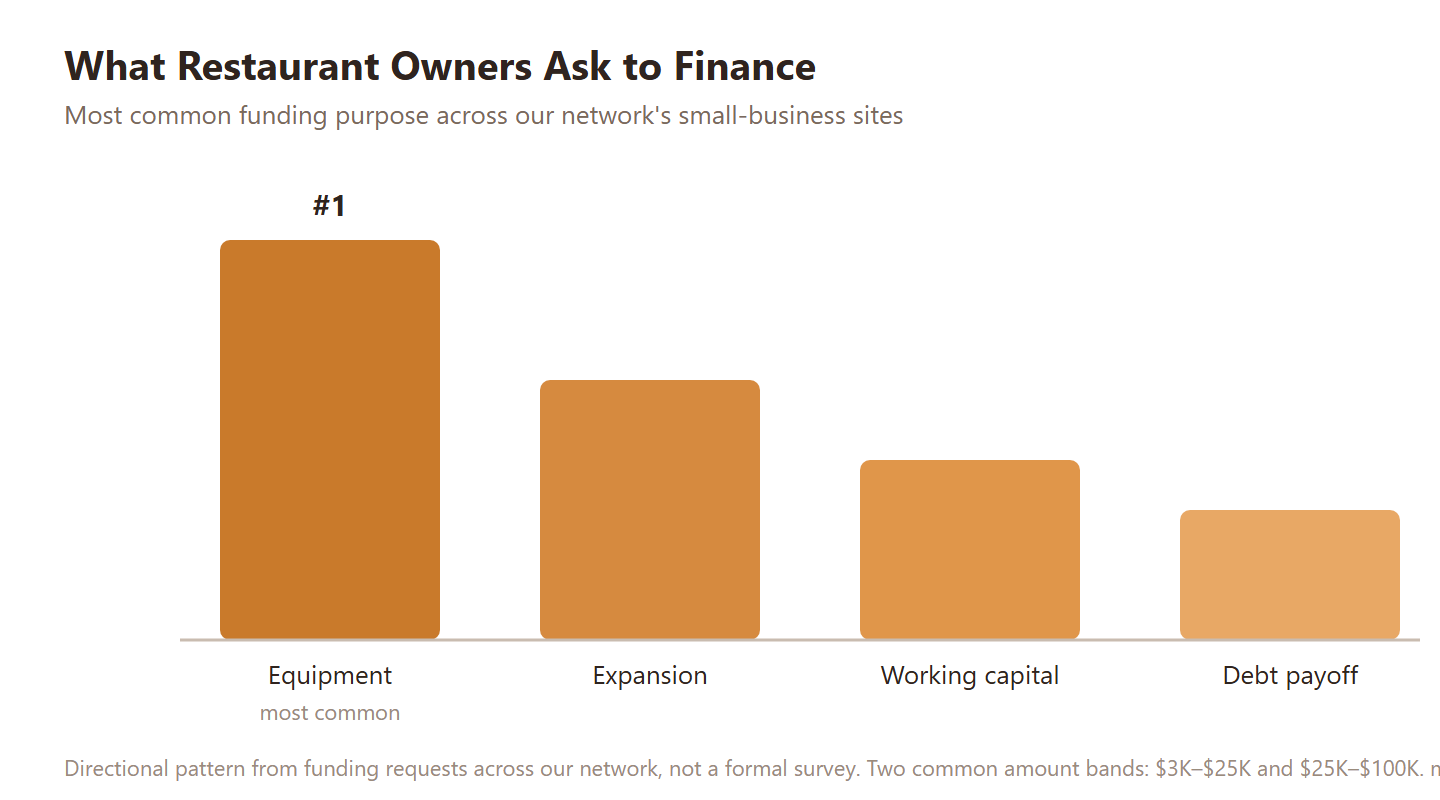
Note: this reflects funding-request patterns across our network's small-business sites, not a formal survey. It's directional — a look at what owners prioritize when they seek capital.
The takeaway for a first-timer: you rarely need to finance the whole $375,000 at once. Most owners cover the buildout with one instrument, finance the equipment separately, and keep a working-capital cushion in reserve — which is why understanding restaurant business loans as a menu (not a single loan) matters.
How Much of This Can You Finance?
Very little of a restaurant startup is paid entirely in cash — the amounts are too large for most first-time owners, and lenders expect it. As rough rules of thumb for 2026:
- SBA 7(a) loans typically fund buildout + equipment + working capital in one package, with 10–20% down. See the U.S. Small Business Administration's 7(a) program for official terms.
- Equipment financing covers 80–100% of equipment cost, secured by the equipment.
- Working capital loans / lines of credit cover the operating cushion.
Estimate what a given loan amount costs per month with our payment calculator, then see which route fits with SBA loans for restaurants or the full restaurant business loans guide.
Ways to Open for Less
- Take a second-generation space — inheriting a working kitchen can cut buildout by 50%+.
- Finance equipment instead of buying outright — preserves the cash you need for the first slow months. See used restaurant equipment financing to go cheaper still.
- Phase your buildout — open with a lean menu and add stations as revenue comes in.
- Keep 3–6 months of working capital untouched — undercapitalization, not the buildout, is what closes new restaurants.
Ready to price your own build? See your financing options — one soft-pull check against restaurant-friendly lenders, no fees.
What business owners say
4.9-
This company was lightning fast and the experience was amazing. Thank you, Dan — you're a real pro!
-
Good service Joseph Krajewski is the best agent ever. He provided excellent service. I strongly recommend working with him if you have the opportunity.
-
They gave me a chance when nobody else would. I'm very satisfied.